
SUNPOL / System comparison
Choose the system that fits your project, your installation conditions and your maintenance plan.
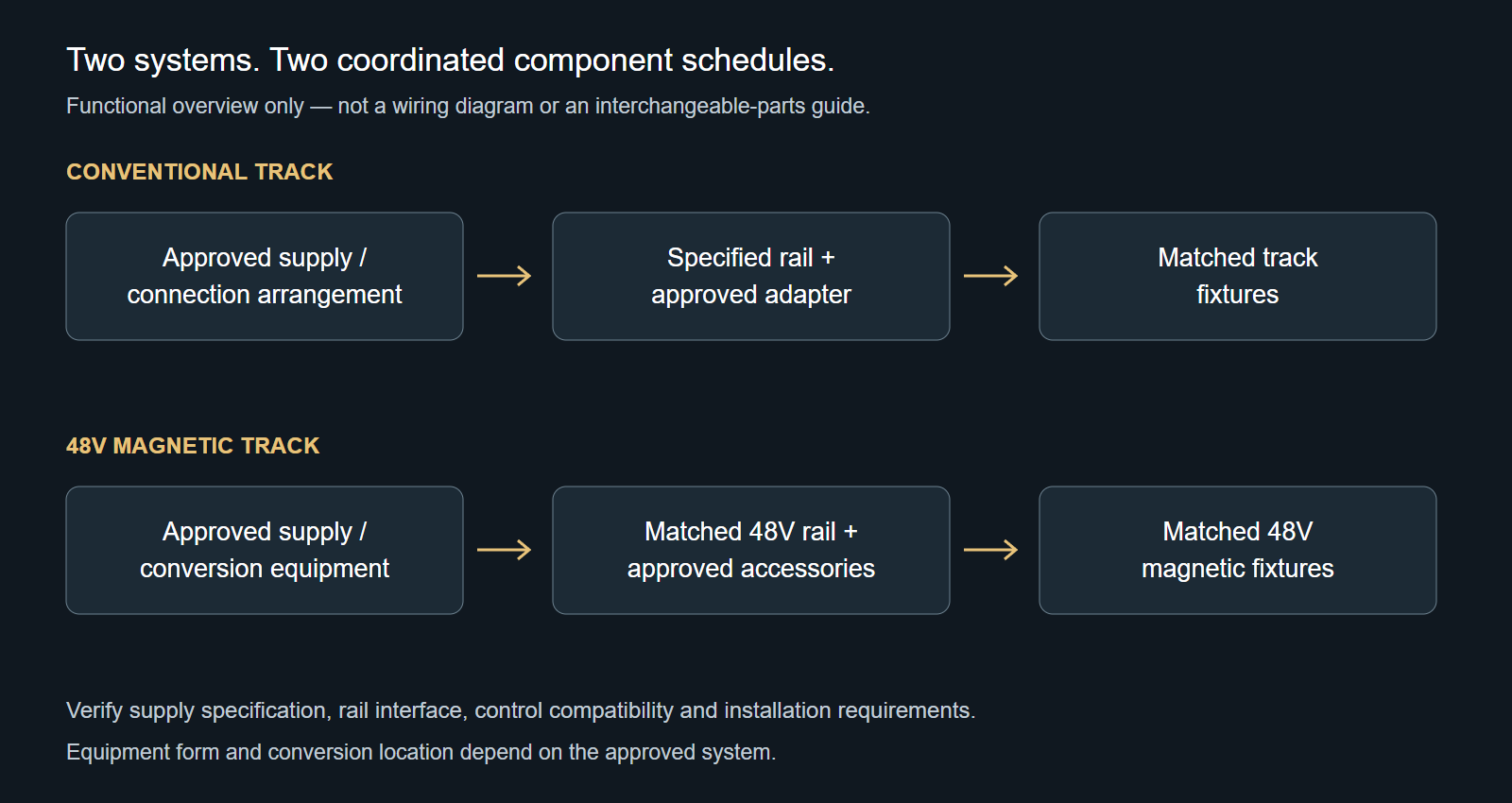
When comparing magnetic track lighting vs traditional track lighting, start with the infrastructure. The rail, fixture interface, supply arrangement and accessories need to work together. A familiar-looking spotlight does not establish compatibility, and a 48V label does not describe the complete installation.
01 / Define the comparison
What is the difference between the two track systems?
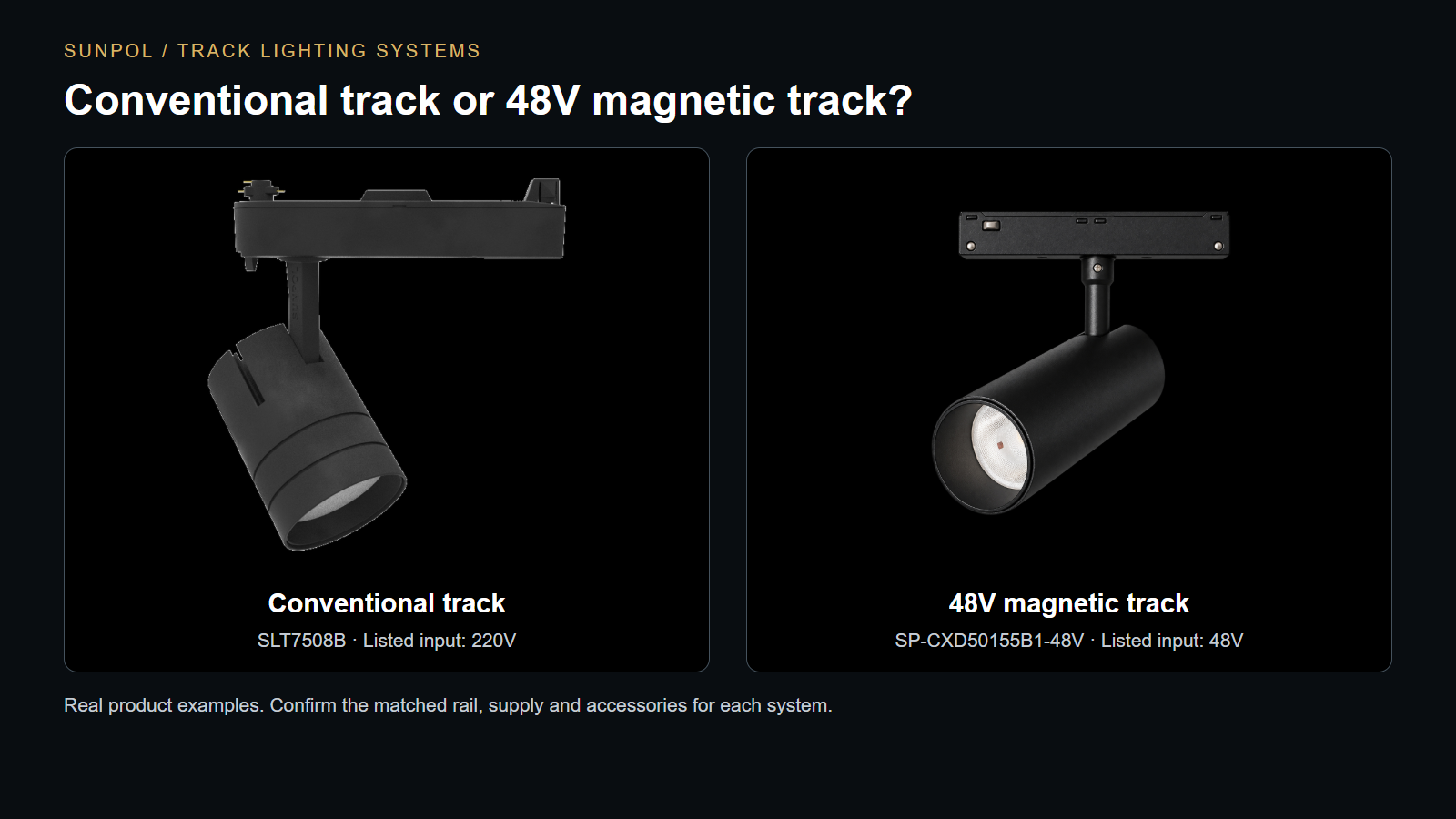
In this guide, conventional track lighting means the mains-voltage track-mounted options being considered for the project. The SUNPOL conventional examples below are listed at 220V. Other markets and product ranges may use different supply specifications; conventional track is not a single worldwide interface.
A 48V magnetic track system combines matched magnetic fixtures, rail and a compatible supply arrangement. Power must be converted to the specified 48V supply through the approved system design. The conversion equipment may be separate or integrated into an approved assembly, depending on the system.
Magnetic describes the mounting and connection arrangement. It does not, by itself, promise dimming, adjustable color temperature or smart controls. Confirm those functions for the selected fixture, driver and control configuration.
If you are still deciding what the lighting must achieve, begin with our commercial track lighting selection guide. This article focuses on choosing between systems rather than repeating beam-angle and color-quality selection.
02 / Compare the complete proposal
Compare the complete system, not just the fixture
| Decision point | Conventional track | 48V magnetic track |
|---|---|---|
| Supply and interface | Confirm the exact rail, adapter and fixture supply requirements. | Confirm the matched 48V rail, fixture interface and approved supply arrangement. |
| Installation method | Check whether the chosen rail supports surface, suspended or recessed mounting. | Check the selected rail profile and mounting accessories; magnetic does not automatically mean recessed. |
| Fixture combinations | Choose compatible spotlights or other fixture types documented for that system. | Confirm which cylinder, grille or other modules are approved for the selected magnetic rail. |
| Controls | Verify the specified driver and control compatibility. | Verify the specified driver and control compatibility; 48V alone does not mean dimmable. |
| Maintenance | Plan access to connections and replacement fixtures for the installed track. | Plan access to the supply equipment, rail connections and replacement modules. |
| Project cost | Include rail, adapters, fittings, fixtures, controls and installation work. | Include matched rail, supply equipment, connectors, fixtures, controls and installation work. |
| Future changes | Check compatible replacement availability and the limits of the existing installation. | Check compatible replacement availability and the limits of the selected magnetic system. |
A fair comparison uses the same display brief, proposed coverage and control requirements. Two quotations with different track lengths, fixture quantities or installation scopes are not directly comparable. Ask each proposal to identify what is included and which site work remains outside the supply package.
Keep light quality as a separate decision
Both approaches need suitable optics, output, color rendering and aiming. The supply voltage or attachment method alone does not establish how well the merchandise will look. Review product samples and project conditions after confirming the system choice.
03 / Retain what is useful
When should you consider conventional track lighting?
Conventional track is a sensible option to evaluate when the project already has documented, serviceable rail and the intention is to retain part of the installation. Start by identifying what can actually be reused: the rail, connectors, supports and controls may have different compatibility constraints.
- Existing-store upgrades: compare the disruption of retaining the rail with the work needed to replace the infrastructure.
- Repeat installations: an established, documented system can help the maintenance team manage replacement fittings and spares.
- Phased refurbishment: check whether the proposed fixtures and controls can be introduced within the retained installation.
These conditions are reasons to investigate conventional track, not a guarantee that old fittings or rails can be retained. Where documentation is missing, include identification and compatibility review in the project scope.
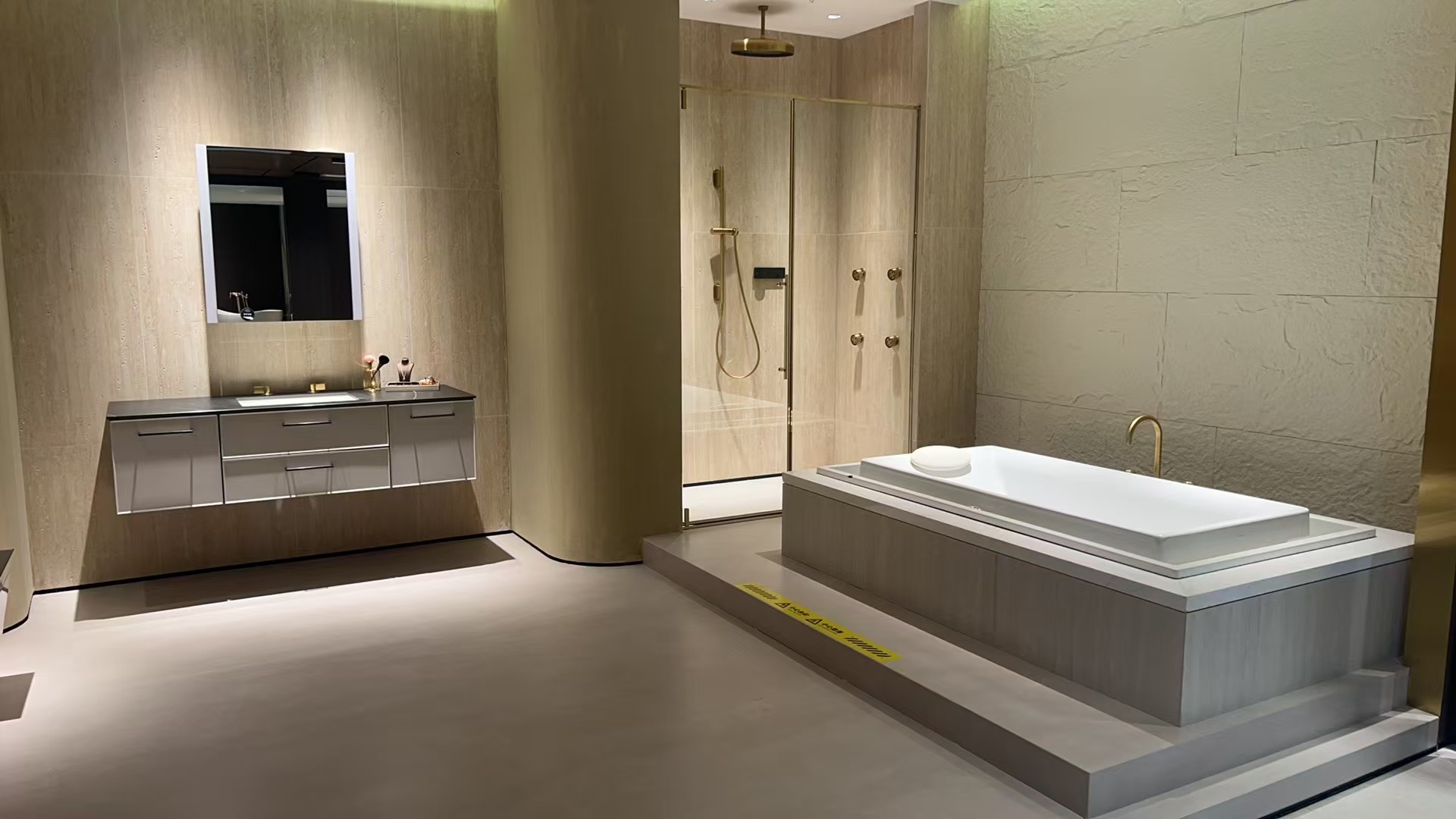
Browse the cylinder track light range once the retained track and electrical requirements are known.
04 / Coordinate the new system early
When should you consider a 48V magnetic track system?
A new store or a complete showroom refurbishment offers an opportunity to coordinate track positions, power equipment and fixture combinations together. A 48V magnetic system is worth evaluating where its documented rail and fixture options fit the desired ceiling arrangement and display strategy.
Plan the power-supply location before the ceiling is closed. Access, allowable operating conditions, connected load, cable routing and permitted distances must be checked against the selected system documentation. Do not choose a supply unit solely because the voltage label matches.
For retail islands, material walls or changing showroom displays, identify the cylinder and grille modules the project needs, then confirm that those exact modules are approved for the rail. The magnetic cylinder track light category and magnetic grille track light category provide SUNPOL product starting points.
Check the physical design rather than assuming it
Verify profile dimensions, visible trim, mounting method, connectors and finished-ceiling details. A narrow appearance, trimless installation or particular suspension arrangement belongs to a specified rail configuration—not to every product described as magnetic track lighting.
05 / Review the replacement scope
Can you replace one system with the other?
Treat a change between conventional and 48V magnetic track as a system review. It is not enough to order a different spotlight head. The existing rail and feed arrangement may need to change, and the new proposal may introduce different supply equipment or connection accessories.
- Identify the existing system. Record the rail and adapter model, supply information, connectors and controls.
- Confirm the replacement specification. Obtain an approved rail, supply, accessory and fixture schedule.
- Review site work. Identify ceiling repairs, mounting changes, access requirements and any disruption to trading.
- Confirm installation and handover. Use qualified electrical personnel and follow the selected equipment documentation and applicable local requirements.
Magnetic attachment should not be interpreted as permission to work on energized equipment. Follow the manufacturer’s instructions for installation, repositioning and maintenance. Do not improvise cross-system adapters or modify connections to make unmatched components fit.
06 / Make a product shortlist
Shortlist SUNPOL models for each system
These four examples identify products to discuss after the infrastructure has been selected. Input voltage and power options are taken from the current SUNPOL parameter sheet. Confirm the selected model, configuration and rail compatibility when requesting a quotation.
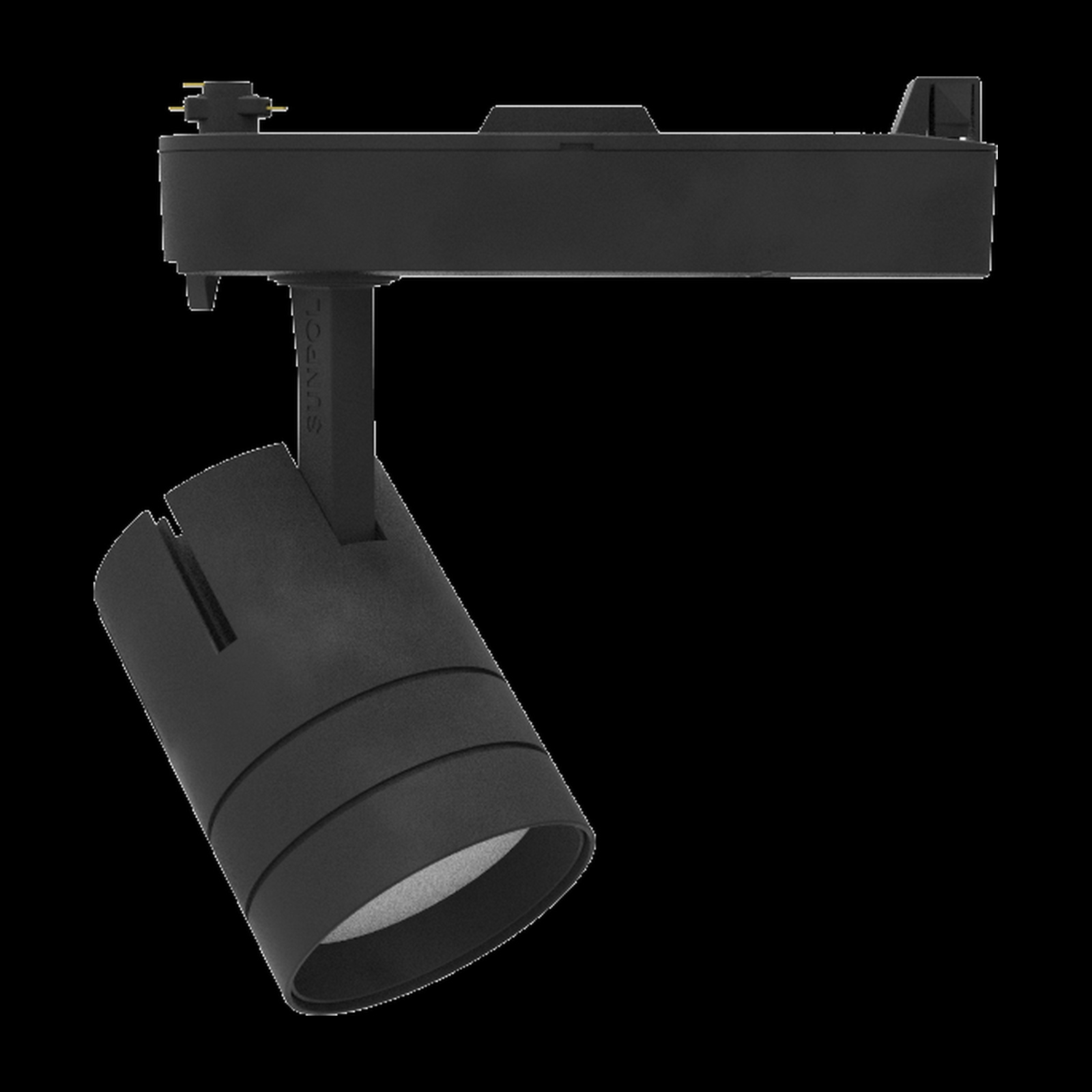
SLT7508B
Conventional / track-mounted
Listed input: 220V
Power configurations: 12 / 15 / 20 / 25W
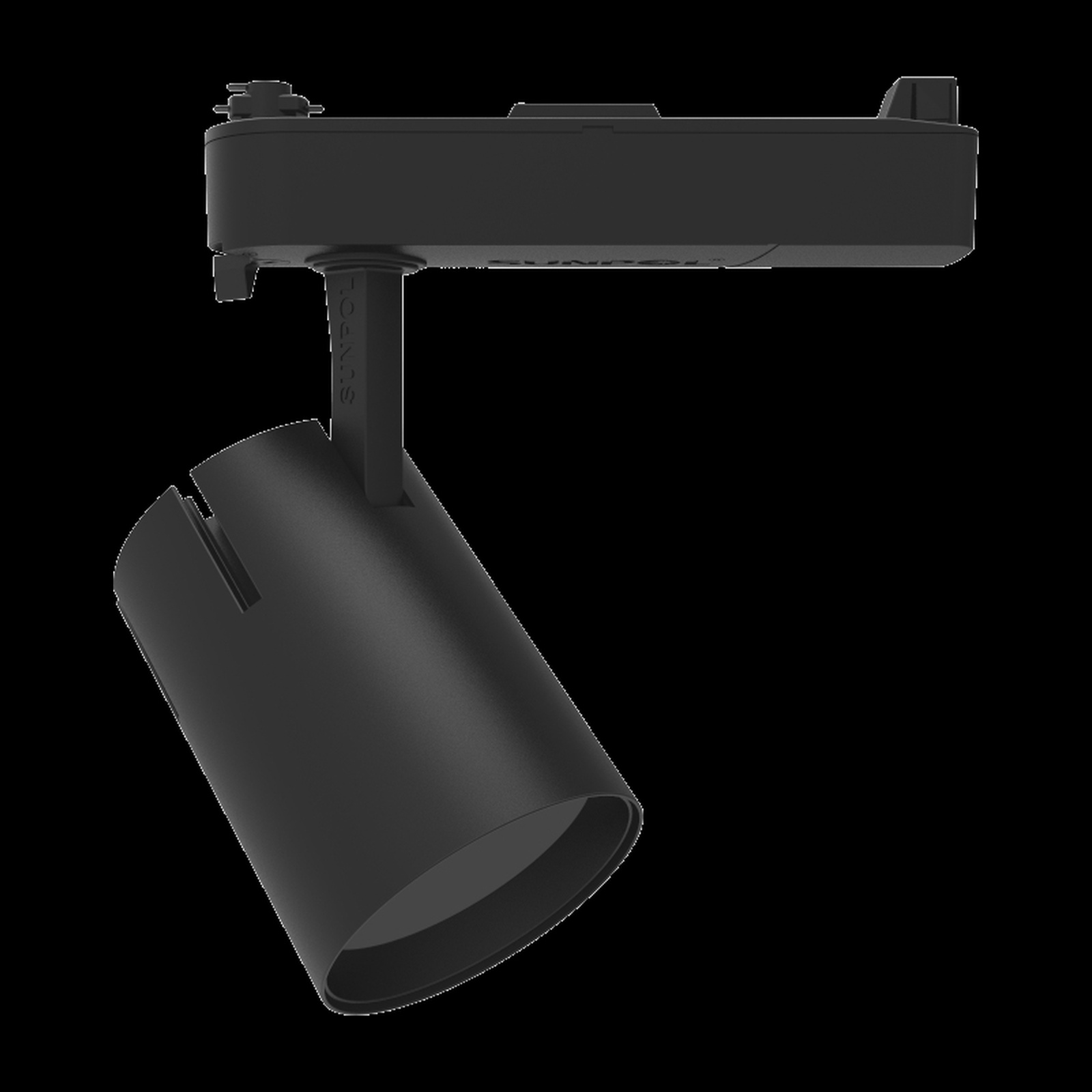
SLT8308B
Conventional / track-mounted
Listed input: 220V
Power configurations: 15 / 20 / 25 / 30 / 35W
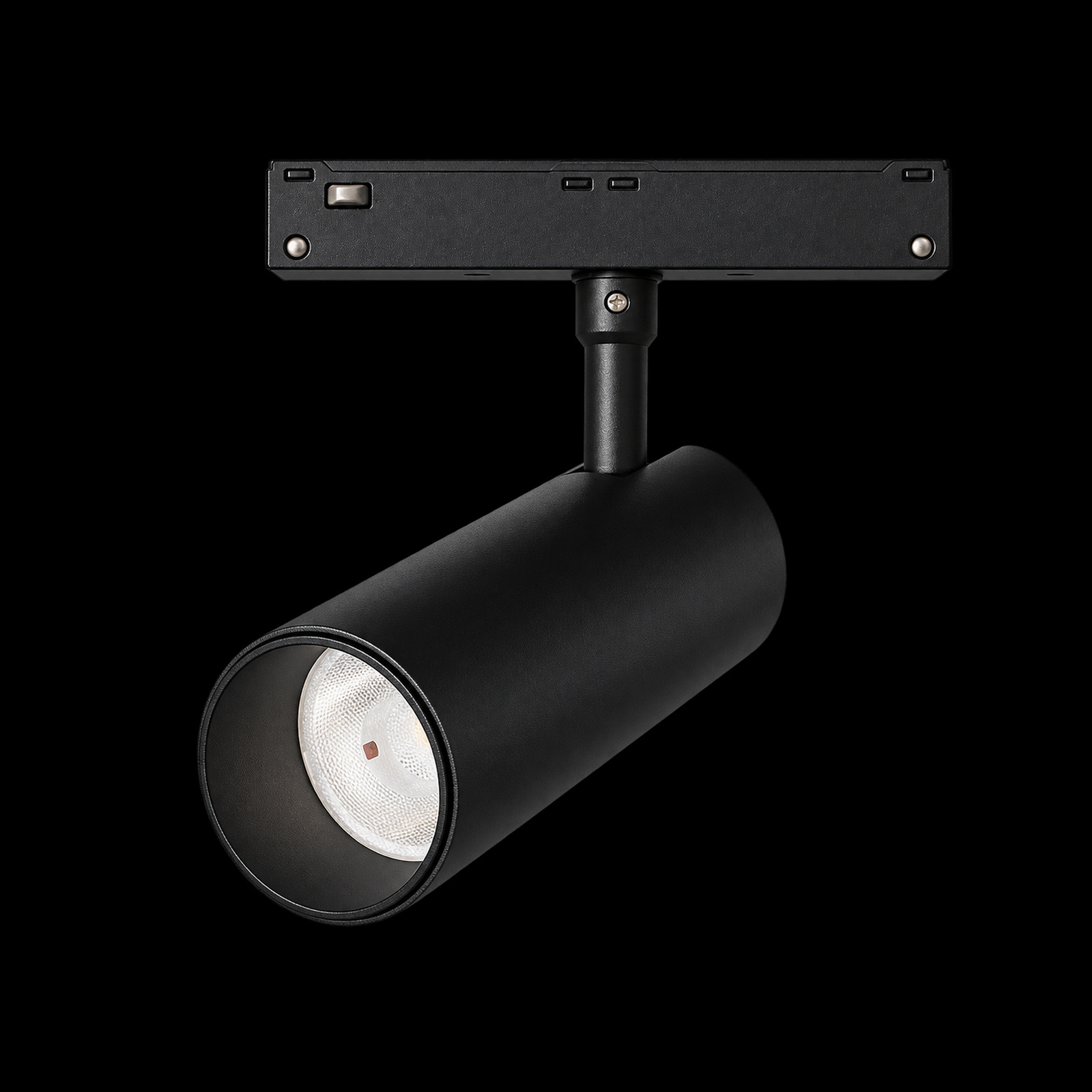
SP-CXD50155B1-48V
Magnetic track-mounted
Listed input: 48V
Power configurations: 12 / 15 / 20 / 25W
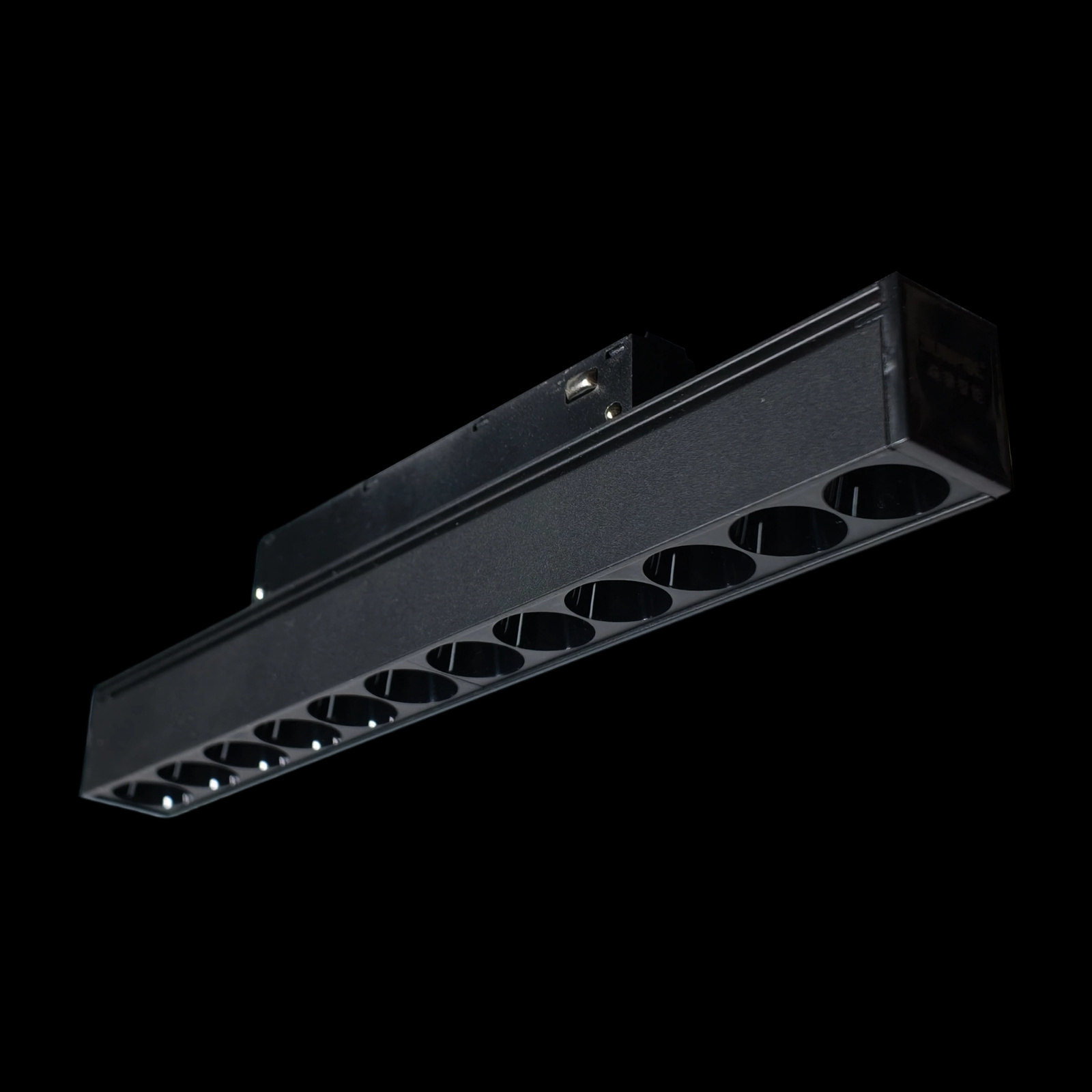
SP-CXG22223H26B2-48V
Magnetic track-mounted
Listed input: 48V
Power configurations: 12 / 15W
The comparison does not establish adapter interchangeability or dimming compatibility. It does not infer supply waveform or market certification from the voltage value.
07 / Decide from the project conditions
A practical checklist before you decide
Identify and assess the retained rail first. Compare compatible fixture options and the full cost of any replacement infrastructure.
Compare two complete proposals using the same ceiling plan, display needs and control requirements. Include access to supply equipment and connections.
Check the actual repositioning procedure and approved fixture range for each system, together with aiming flexibility and spare availability.
Compare installed project cost: fixtures, rail, supply equipment, connectors, mounting accessories, controls, labor and future servicing.
Send SUNPOL a floor plan, ceiling height, track photographs and model details, the intended fixture mix, quantity, controls and refurbishment timing. Include photographs of the displays and actual materials where possible.

For broader design support, explore retail store lighting solutions or review our commercial track light supplier checklist.
Before specifying
Magnetic vs conventional track lighting FAQs
Can magnetic track lights be fitted to a conventional track?
Do not assume direct compatibility. Use the rail, fixture interface and accessories approved for the selected system. Obtain explicit manufacturer confirmation rather than relying on appearance or an improvised adapter.
Does 48V magnetic track lighting require a separate power supply?
The fixtures require a compatible 48V supply through the approved system design. Conversion equipment may be separate or part of an approved assembly. Confirm the equipment type, location, load and access requirements for the exact system.
Is magnetic track lighting always dimmable?
No. Dimming depends on the fixture, driver and control configuration. Magnetic mounting or a 48V label alone does not establish a supported dimming protocol.
How should I compare the total project cost?
Use the same display brief and installation scope for both proposals. Include fixtures, rail, power equipment, connectors, mounting hardware, controls, installation and future maintenance. Ask what is excluded from each quotation.
Compare systems for your retail or showroom project
Share your layout, existing-track information and preferred fixture mix. SUNPOL can help review relevant product options and the technical information needed for a project quotation.