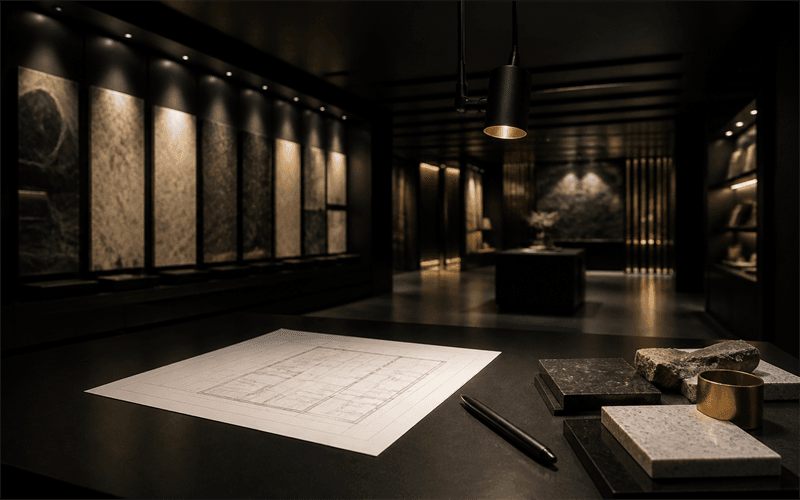
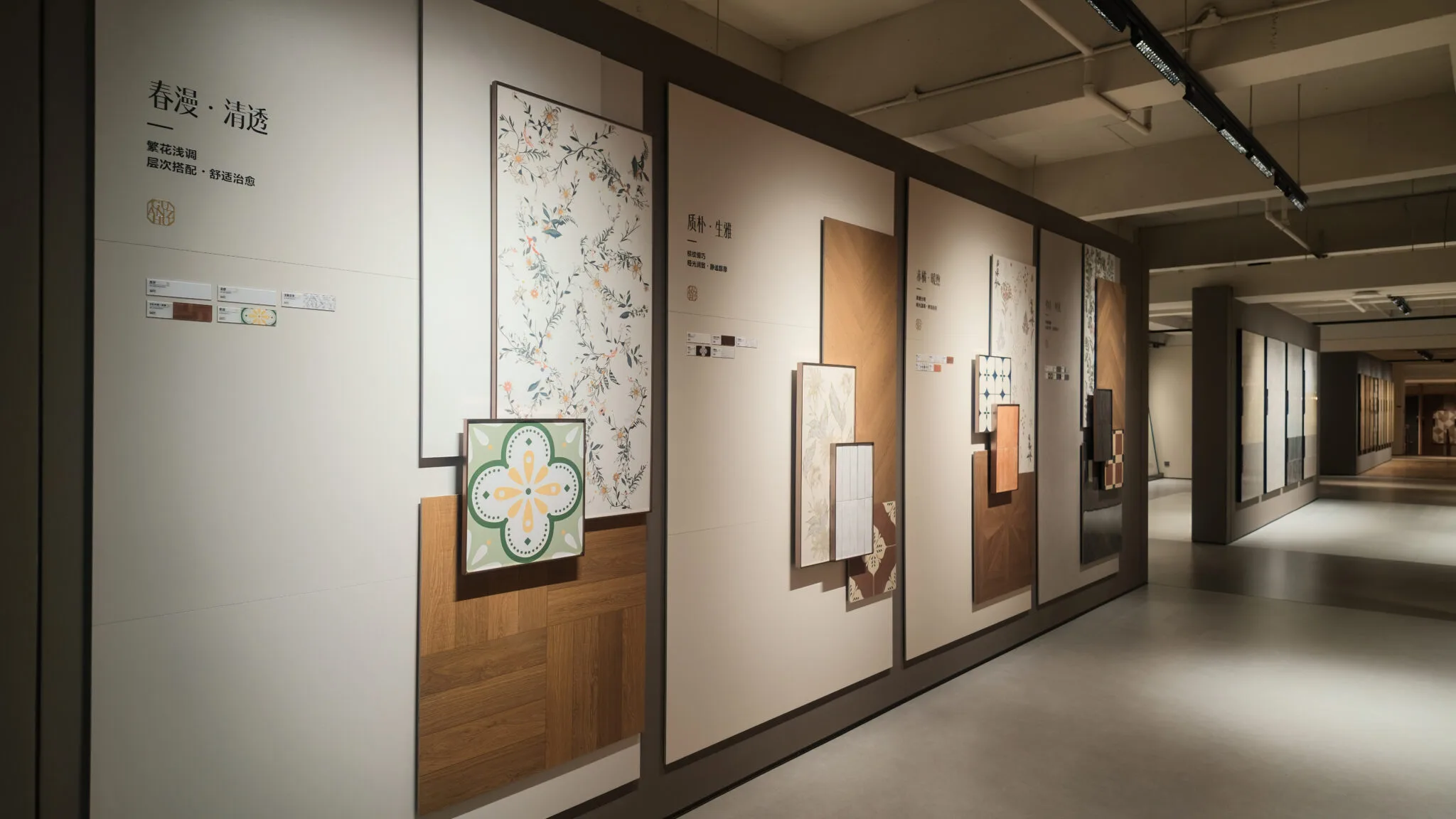
Walk into a well-designed showroom, and you may notice something interesting. The products look bright, the textures are easy to see, and the lighting feels comfortable. Yet the light fixtures themselves barely attract attention.
Now imagine the opposite. Powerful spotlights illuminate every display, but looking across the room means repeatedly seeing bright LED sources. Polished tiles reflect uncomfortable points of light, and customers instinctively look away from certain areas.
Both spaces may have similar illumination levels. The difference often lies in how the light is controlled.
This is where an anti glare track light becomes important.
Unlike a conventional spotlight that primarily directs light toward a surface, an anti-glare track light is designed to manage what happens around the beam as well. Its optical structure helps limit direct visibility of the bright source, control unwanted light at high viewing angles, and direct useful illumination toward the intended display.
Understanding how these fixtures work makes it easier to choose lighting for retail stores, galleries, ceramic tile showrooms, and other commercial interiors where visual comfort matters just as much as brightness.
What Is an Anti-Glare Track Light?
An anti-glare track light is a track-mounted LED luminaire designed to reduce uncomfortable brightness within the observer’s field of view while maintaining useful directional illumination.
It typically achieves this through one or more optical features: a recessed LED source, a shielding baffle, a honeycomb louver, a carefully shaped reflector, or a controlled lens system.
The aim is not to eliminate brightness. A commercial spotlight needs enough intensity to illuminate products effectively.
Instead, the purpose is to control where that brightness is visible.
Two types of glare are particularly relevant to commercial lighting.
Direct glare occurs when someone looks toward a bright luminaire and experiences visual discomfort. Reflected glare occurs when light bounces from a glossy or reflective surface into the viewer’s eyes.
An anti-glare optical system primarily addresses direct glare, although appropriate beam direction and installation can also reduce unwanted reflections.
That distinction matters in showrooms displaying polished stone, glazed ceramics, mirrors, chrome fittings, and glass.
Deep-Recessed LEDs: Why Hiding the Light Source Works
One of the most effective ways to reduce direct glare is surprisingly simple: move the LED source farther back inside the fixture.
In a conventional spotlight, the luminous surface may sit close to the front opening. When a customer walks past or looks upward, the bright LED or lens can be directly visible.
A deep-recessed design places the light source behind the front edge of the luminaire, creating a physical barrier between the LED and the observer.

The role of the shielding angle
The shielding angle, sometimes called the cutoff angle, describes the geometry that prevents the light source from being seen from certain viewing directions.
Imagine looking at a spotlight from across a showroom.
If the LED is positioned close to the opening, you may see the luminous source directly. If the LED is recessed behind a sufficiently deep baffle, the fixture housing blocks that direct line of sight.
The relationship between source depth, aperture size, and viewing direction determines how effectively the source is shielded.
A deeper recess can improve visual comfort, but it also introduces design trade-offs. Excessive shielding may restrict useful beam spread, reduce optical efficiency, or require a larger luminaire.
Good optical design balances these factors rather than maximizing recess depth alone.
Why this matters in a showroom
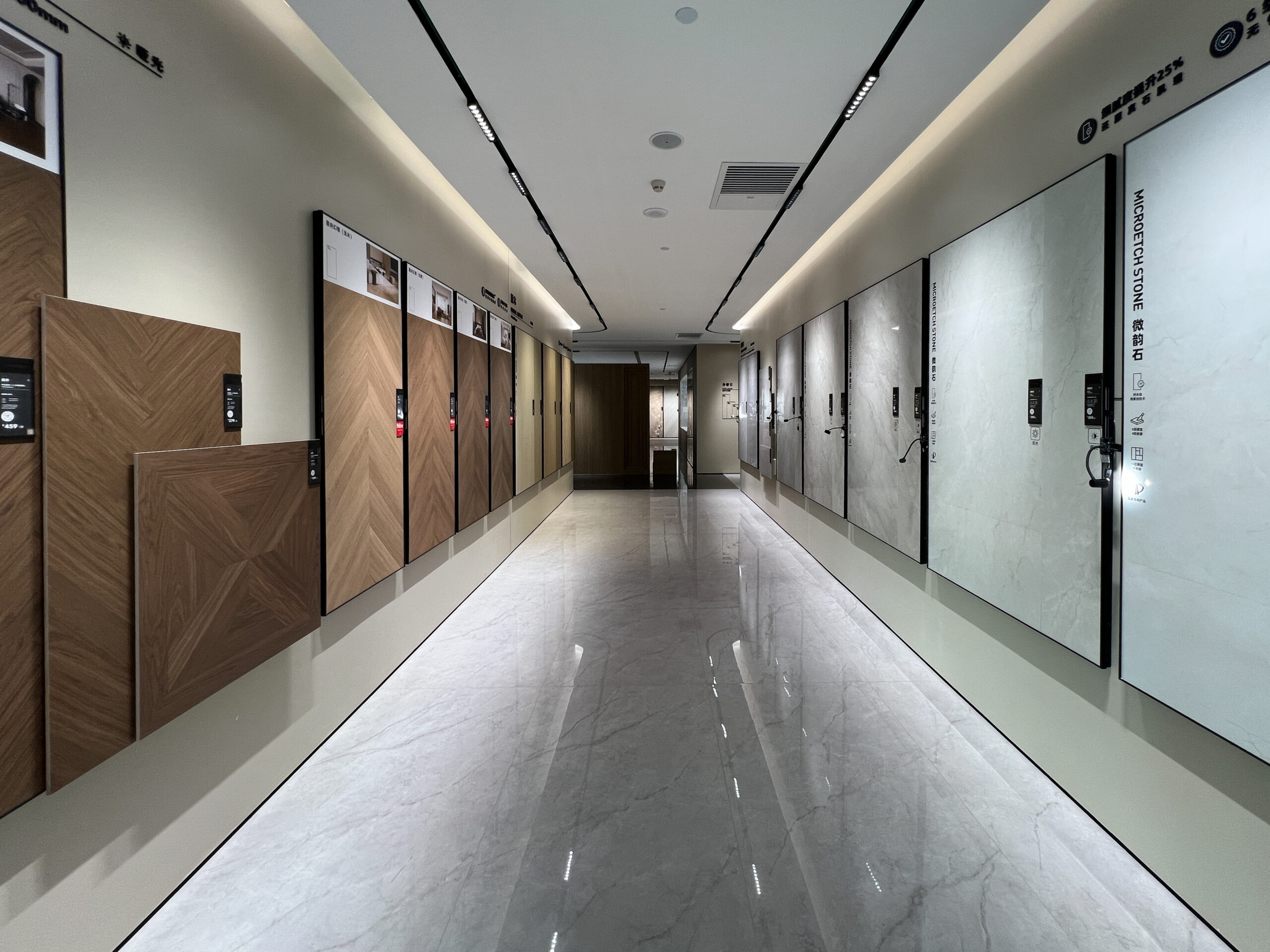
Consider a ceramic tile showroom where large wall-mounted slabs are illuminated by adjustable track lights.
Customers rarely stand in one fixed position. They walk between displays, compare samples, and examine surfaces from different angles.
A spotlight that looks comfortable from directly below may become uncomfortable when viewed from the opposite side of the room.
Deep-recessed optics help reduce this problem by limiting the viewing directions from which the bright source is exposed.
Anti-Glare Baffles: Controlling Brightness Around the Aperture
The recessed LED is only part of the optical system.
The inner surface surrounding it also influences glare.
This component is commonly called a baffle or anti-glare shield. Depending on the fixture, it may take the form of a smooth recessed cone, a ribbed inner cylinder, or a specially finished optical cavity.
A black or dark matte baffle often helps create a visually quiet opening by reducing unwanted reflections from its surface.
A carefully engineered reflective baffle, however, can also provide effective optical control. The finish must be considered alongside its geometry.
This explains why two spotlights with similar external appearances can feel very different when switched on.
One may expose a large, bright aperture. The other may present a darker opening with light concentrated into the intended beam.
The difference becomes particularly noticeable in premium retail environments where ceiling fixtures are expected to remain visually discreet.
For designers, the important question is not simply whether the fixture has a black interior. It is whether the entire optical assembly controls high-angle brightness without sacrificing the required illumination.
Honeycomb Louvers: Small Cells That Make a Significant Difference
Honeycomb louvers are another useful approach to anti-glare lighting.
A honeycomb louver consists of many small cells arranged across the light-emitting opening. These cells are generally dark and relatively deep compared with their width.
When light travels approximately along the intended beam direction, much of it can pass through the openings.
Light traveling at more oblique angles may strike the cell walls and be absorbed or redirected.
The result is additional shielding against unwanted high-angle light.

Honeycomb louver vs. anti-glare baffle
Although they perform related functions, these two components work differently.
A recessed baffle shields the light source using the geometry of the surrounding optical cavity.
A honeycomb louver introduces multiple smaller shielding channels across the aperture.
The louver can provide additional directional screening, particularly where a fixture would otherwise expose a bright optical surface.
But a honeycomb accessory is not automatically the best option for every project.
Its cell geometry may reduce transmitted light and change the beam distribution. If the louver is added to an existing spotlight, the resulting performance should be checked rather than assumed.
For this reason, professional anti glare track light solutions should evaluate the louver, LED, lens, and reflector as one optical system.
Multi-cell grille track lighting
A related approach uses larger multi-cell structures, with individual optical compartments arranged along a linear fixture.
SUNPOL offers the SP-GD58535H61B1 20-Cell Grille Track Light, a 30W track-mounted luminaire with a multi-cell grille design.

Multi-cell grilles and hexagonal honeycomb accessories are not identical optical structures, but both demonstrate how physical shielding can influence the visibility of a light source.
For long display walls, a multi-cell fixture may also offer a different visual appearance from a series of individual cylindrical spotlights.
Lens and Reflector Design: Keeping Light Where It Belongs
A spotlight can have a deep recess and a well-designed baffle yet still create uncomfortable lighting if its beam distribution is poorly controlled.
This is where the lens and reflector become essential.
Inside an LED track light, a lens or reflector shapes how light leaves the luminaire. Depending on the design, it can concentrate the beam, produce a wider distribution, or control the transition between the bright central area and its surroundings.
A reflector uses its shaped surfaces to redirect light. A lens controls light through refraction and, in some optical systems, total internal reflection.
Both approaches can produce effective accent lighting.
The relevant question is how the finished optical system distributes intensity at different angles.
Beam angle is not the same as glare control
Two track lights may both specify a 24° beam angle yet have noticeably different visual characteristics.
One might have a well-defined beam with relatively little spill light. Another might produce a broad peripheral glow or expose more of its luminous aperture.
The nominal beam angle alone does not describe all of these differences.
In lighting specifications, beam angle is commonly measured between directions where luminous intensity falls to 50% of its peak value.
It does not tell the designer everything about spill light, cutoff, or source luminance.
For commercial applications, the full photometric distribution is more informative than a beam-angle number by itself.
Choosing a beam for the display
Consider three common showroom situations.
| Display type | Indicative beam | Design priority |
|---|---|---|
| Small sculptures or individual products | 15°–24° | Concentrated accent lighting |
| Medium-sized merchandise displays | 24°–36° | Balanced coverage and contrast |
| Large tile or stone display walls | 36° or wider, or coordinated multiple fixtures | Wider, controlled illumination |
These ranges are starting points, not fixed rules. Mounting height, aiming angle, target size, spacing, and the actual intensity distribution determine the final result.
SUNPOL’s SP-GD6290B2 Cylinder Track Light offers 15°, 24°, and 36° beam configurations, providing different choices for directional display lighting.
For any project requiring a defined glare performance, the specific optical configuration should still be assessed using photometric information and installation conditions.
Why UGR Matters — and Why It Does Not Tell the Whole Story
UGR stands for Unified Glare Rating. It is a method used to assess discomfort glare in indoor lighting installations.
The calculation considers factors including luminaire luminance, apparent source size, position in the observer’s field of view, and background luminance.
Generally, a lower UGR indicates less predicted discomfort glare under the evaluated conditions.
However, UGR is not simply a permanent property of an individual track light.
The same luminaire may produce a different glare experience depending on its position, aiming direction, room geometry, and observer location.
This is especially relevant to adjustable track lighting.
A fixture directed toward a display wall may be comfortable from the main circulation route. If the same fixture is rotated toward customers, the bright optical opening may become much more visible.
The International Commission on Illumination (CIE) also notes that conventional UGR calculations can underestimate discomfort associated with certain highly non-uniform LED luminance patterns. CIE+1
For professional projects, a manufacturer’s glare claim should therefore be supported by appropriate photometric data and evaluated in the context of the actual lighting layout.
A product labeled “UGR less than 19” should not be assumed to achieve that value in every installation.
Anti-Glare Track Lighting in Real Commercial Spaces
The performance of an anti-glare fixture becomes most apparent when it is installed in a real environment.
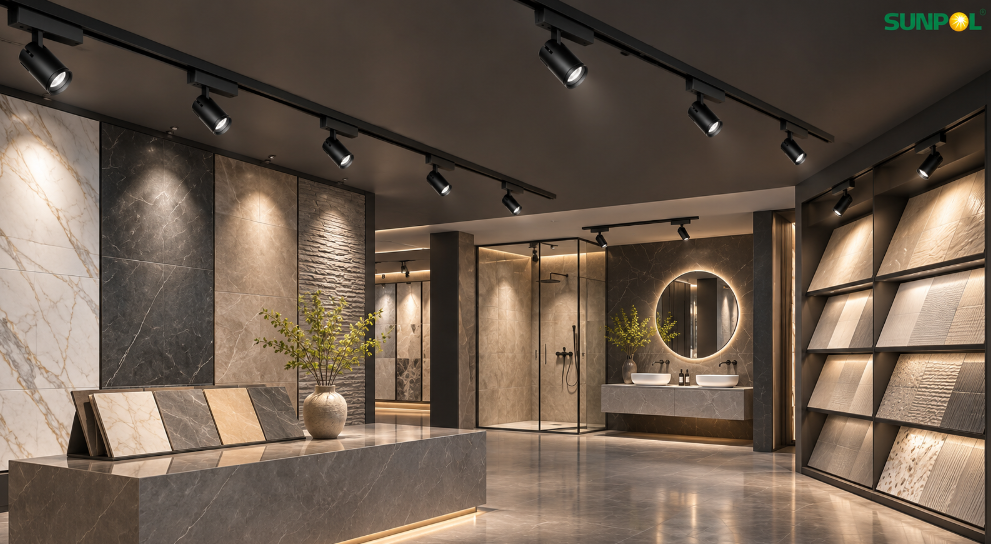
In a ceramic tile showroom, the challenge often comes from reflective surfaces. Polished slabs can create bright mirrored images of overhead luminaires, even when the fixtures themselves have effective shielding.
The solution involves both optical control and positioning.
A recessed or shielded spotlight can reduce direct source visibility, while a suitable aiming angle helps prevent strong reflections from reaching the customer’s normal viewing position.
Textured stone presents a different challenge. Some directional light is desirable because it produces the small highlights and shadows that reveal the material’s surface.
Excessively diffuse lighting can make these textures appear flatter.
Bathroom showrooms add another layer of complexity. Mirrors, polished faucets, glazed basins, and glass partitions reflect light in different directions.
Here, placing every luminaire directly above the products is rarely the ideal approach. The relationship between the fixture, reflective surface, and customer viewing position needs to be considered carefully.
These situations are why SUNPOL approaches commercial display lighting solutions through the combined selection of fixtures, optical distributions, and installation layouts rather than relying on a single product specification.
How to Choose an Anti-Glare Track Light
A useful anti glare track light guide should begin with the conditions in which the luminaire will operate.
Before comparing wattages or fixture designs, examine the viewing positions, ceiling height, display dimensions, and surface finishes.
A few questions are worth asking when evaluating a commercial track light:
- Is the LED source directly visible? Examine the fixture from different viewing angles, not only from directly underneath.
- How is the beam controlled? Ask about the reflector, lens, baffle, and available beam distributions.
- Does the fixture use additional shielding? A honeycomb louver or multi-cell grille may be useful, but its impact on output and beam shape should be understood.
- Can the fixture be aimed accurately? Adjustable positioning helps direct light toward merchandise rather than customers.
- Are photometric files available? IES or LDT data can support more reliable lighting calculations.
- Is the color quality appropriate? Glare control and color rendering are separate characteristics, and both matter when displaying materials.
For projects involving different fixture styles, the SUNPOL Track Lighting collection provides a starting point for comparing adjustable track-mounted lighting options.
It is also worth checking how the lighting performs with actual material samples. A fixture that looks excellent in a catalogue may behave differently beside a polished porcelain slab or a wall of reflective bathroom fittings.
The SUNPOL Approach: Optical Control Before Excessive Brightness
At SUNPOL lighting, commercial illumination is approached through the relationship between the light source, the product being displayed, and the people experiencing the space.
A brighter spotlight is not necessarily a better spotlight.
For premium material showrooms, the goal is to create enough contrast to reveal texture and form while keeping unwanted brightness under control.
This involves selecting an appropriate optical system, matching the beam to the display, and positioning the luminaire with the customer’s viewing direction in mind.
Different showroom areas may call for different solutions.
Individual feature products can benefit from focused adjustable spotlights. Long display walls may be better served by coordinated multi-cell lighting or carefully arranged wider beams. Reflective products often require more attention to luminaire placement than simply adding extra shielding.
No single optical design is ideal for every application.
The more effective approach is to choose the lighting arrangement according to what customers need to see and how they move through the space.
Frequently Asked Questions
Do anti-glare track lights reduce brightness?
Not necessarily. Anti-glare designs aim to reduce unwanted brightness in certain viewing directions while preserving useful illumination on the target. Some shielding accessories can reduce total light output, so the finished luminaire’s photometric performance matters.
What is the difference between a honeycomb louver and a deep-recessed spotlight?
A deep-recessed spotlight uses the depth and shape of its housing to shield the LED source. A honeycomb louver uses multiple small cells to limit light visibility at oblique angles. Some fixtures combine both approaches.
Are anti-glare track lights suitable for ceramic tile showrooms?
Yes. They can help reduce direct glare while providing directional illumination for ceramic tiles, natural stone, and decorative materials. However, reflective glare from glossy slabs must also be managed through beam positioning and the overall lighting layout.
Is a lower UGR always better?
A lower calculated UGR generally indicates less predicted discomfort glare for the evaluated conditions. However, UGR depends on the lighting installation and observer position. A claimed value should not replace an assessment of the actual project.
Can a narrow-beam track light still cause glare?
Yes. A narrow beam concentrates light, but it does not automatically conceal the luminous source. A poorly positioned narrow-beam spotlight can still shine directly into someone’s eyes or create a strong reflection on a glossy surface.
Final Thoughts
The most effective anti-glare lighting is often the lighting people do not consciously notice.
They see the products clearly. They recognize subtle material differences. They can move around the space without repeatedly encountering uncomfortable points of brightness.
Achieving that result takes more than a black reflector or a honeycomb accessory.
It requires the right combination of source shielding, baffle geometry, optical distribution, and installation design.
For architects, retailers, and showroom owners, understanding how these elements work together makes it easier to choose lighting that supports both visual comfort and product presentation.
Explore SUNPOL’s Grille Track Lighting collection to discover additional lighting options for professional commercial environments.