Choosing a commercial lighting manufacturer is not simply about finding a factory that can produce LED fixtures at a competitive price. For lighting brands, distributors, contractors, and project developers, the more important question is whether that manufacturer can consistently turn product requirements into reliable, market-ready lighting solutions.
A fixture may look impressive in a catalog, but its real value becomes clear during installation and daily operation. Beam consistency, thermal management, component quality, manufacturing accuracy, and technical support all influence the success of a commercial lighting project.
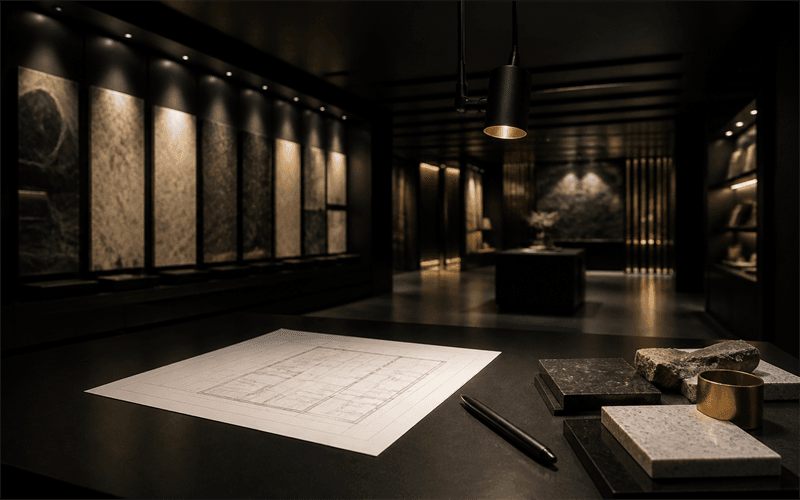
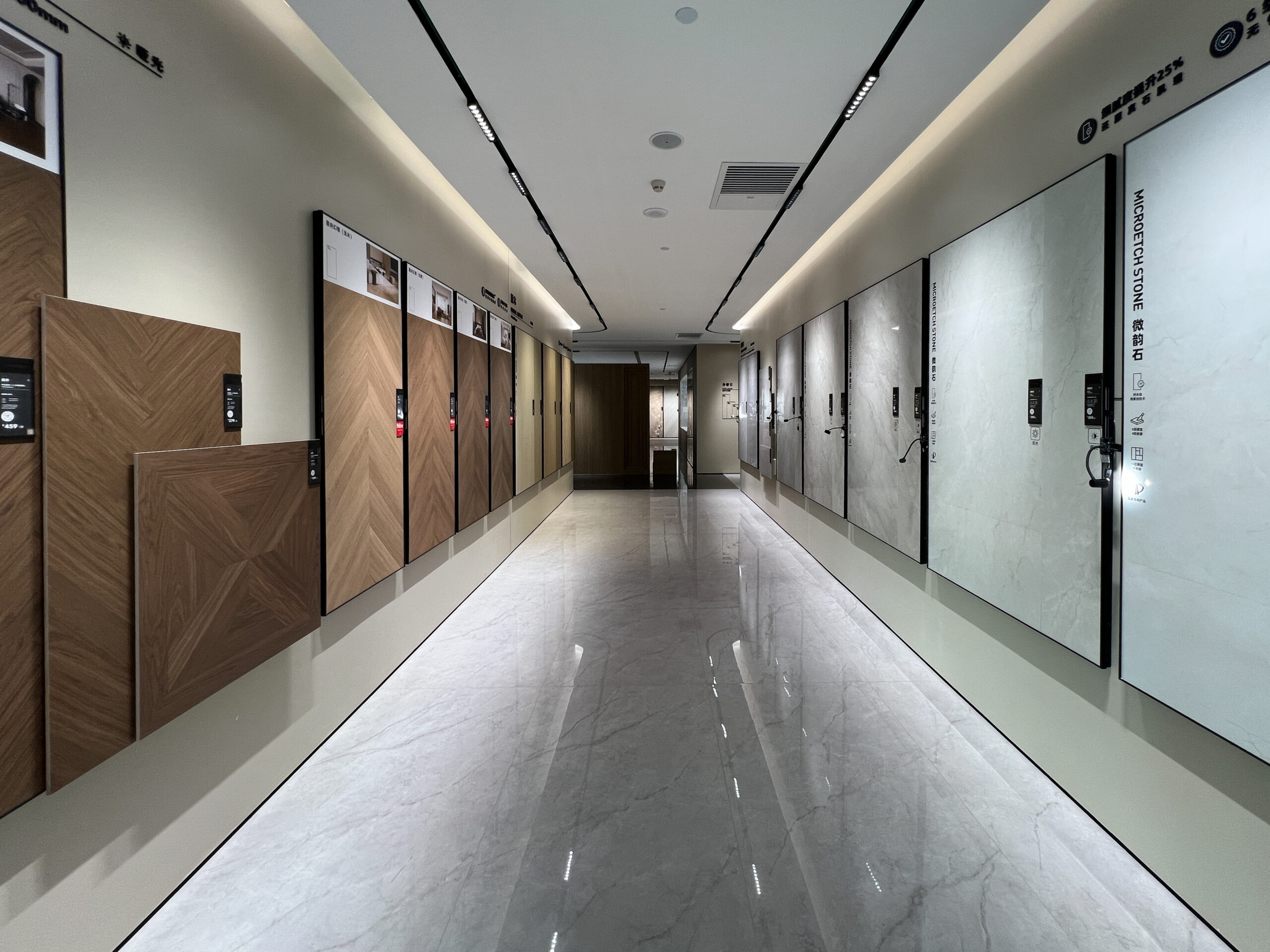
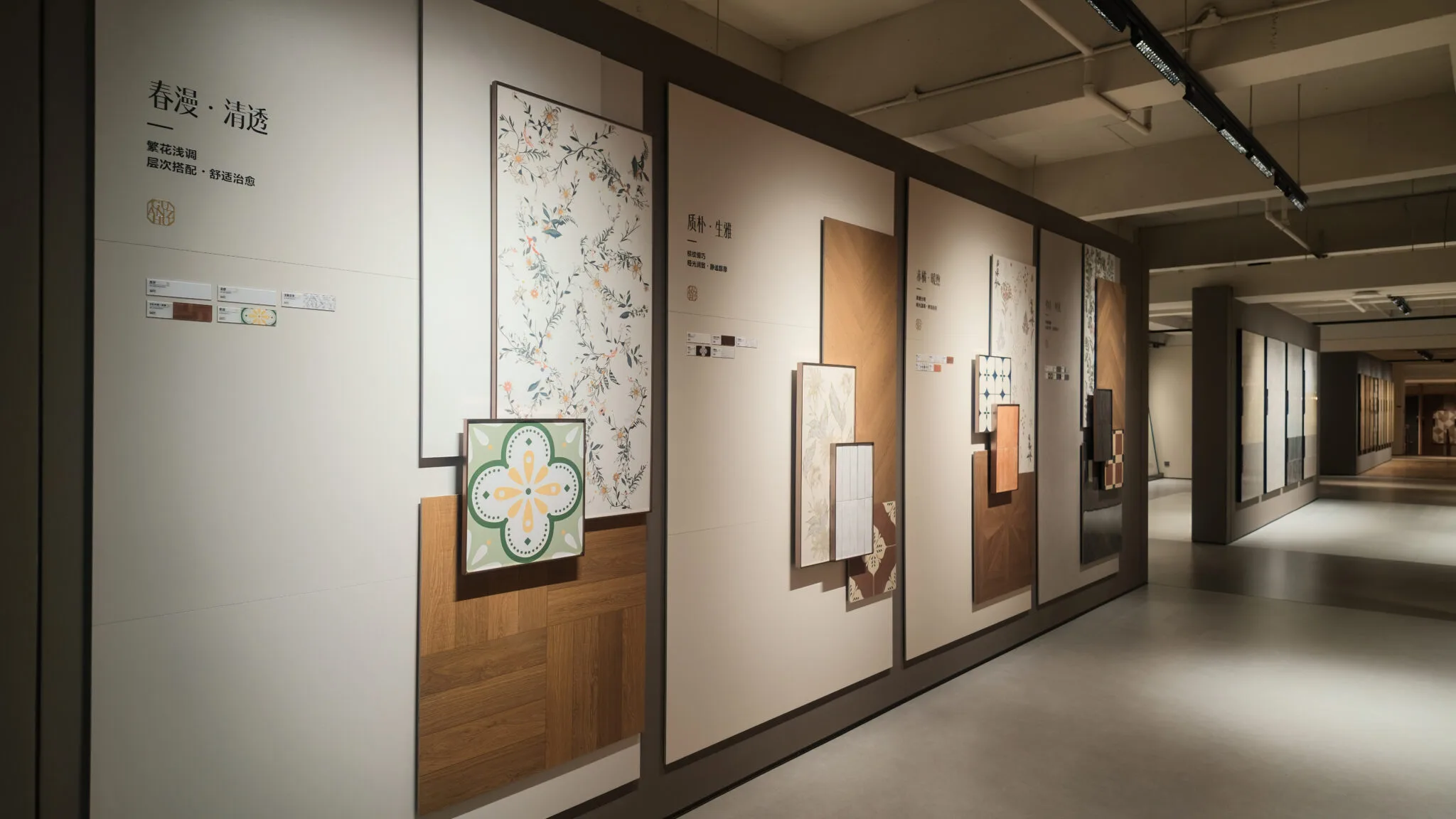
This is particularly important in retail stores, tile and stone showrooms, galleries, and other display-focused environments where lighting directly affects how products and materials are perceived.
At SUNPOL, commercial lighting development brings together application-focused design, precision manufacturing, and quality verification. This article explores what buyers should expect from an OEM/ODM lighting partnership and how a structured manufacturing process can reduce project risks.
1. What Makes a Reliable Commercial Lighting Manufacturer?
Commercial lighting involves more than assembling LED chips, drivers, and aluminum housings.
A manufacturer needs to understand how these components interact under real operating conditions.
For example, increasing the power of a spotlight may improve luminous output, but it can also introduce additional thermal challenges. Changing the beam angle may improve accent lighting in one application while creating unwanted glare in another.
These decisions require engineering judgment rather than simple component substitution.
A capable manufacturer should demonstrate expertise in four essential areas:
- Optical engineering: Developing suitable beam distributions, color characteristics, and glare-control solutions.
- Mechanical manufacturing: Maintaining accurate dimensions, stable construction, and consistent finishes.
- Electrical integration: Matching LED modules, drivers, and control requirements to the intended application.
- Quality verification: Checking whether finished products meet approved specifications.
For professional buyers, the real measure of manufacturing capability is repeatability. A well-produced sample is valuable, but consistent quality across subsequent production batches is what builds long-term confidence.

2. Precision Manufacturing: From Raw Material to Finished Luminaire
Manufacturing quality begins long before the final lighting fixture reaches the assembly line.
Housing materials, machining tolerances, optical alignment, and surface finishes all contribute to the performance and appearance of a commercial luminaire.
Aluminum Construction and Thermal Management
Heat dissipation is a critical consideration in LED lighting design.
Excessive operating temperatures can negatively affect LED performance, driver reliability, and long-term color stability.
SUNPOL uses 1070 aluminum and cold-forging technology in selected commercial lighting products. Its manufacturing capabilities also include CNC precision machining, supporting accurate component dimensions and refined mechanical construction.
These methods are particularly relevant to compact track lights and recessed spotlights, where thermal performance and architectural appearance must be considered together.
However, material selection alone does not establish product lifetime. Thermal design should be evaluated alongside operating conditions, component specifications, and appropriate testing.
Precision Assembly and Inspection
Small manufacturing differences can become noticeable in commercial installations.
An incorrectly aligned optical component may affect beam distribution. Inconsistent finishing can become apparent when dozens of fixtures are installed together. Poor dimensional control may create difficulties during installation.
SUNPOL describes a manufacturing process covering material preparation, precision machining, assembly, and final inspection.
Buyers interested in understanding these production stages can explore SUNPOL’s commercial LED lighting factory and manufacturing capabilities.
For OEM and ODM projects, manufacturing accuracy is especially important because approved designs must remain consistent when production moves from prototypes to larger orders.
3. Research and Development: Turning Lighting Requirements into Practical Products
A strong commercial lighting manufacturer should contribute technical expertise during product development, rather than simply manufacture whatever appears on a drawing.
Commercial lighting requirements vary considerably between applications.
A ceramic tile showroom may require lighting that reveals subtle surface textures and color differences. A fashion retailer may prioritize merchandise color accuracy and visual hierarchy. A gallery may require carefully controlled beam distributions and unobtrusive fixture designs.
These differences influence product selection and engineering priorities.
SUNPOL’s published company information highlights research and development activity, including 72 reported patents across invention, utility-model, and design categories, as well as proprietary intelligent lighting technology.
For buyers, such information provides useful background on the company’s development focus, although individual patents and their relevance should be assessed separately for specific technical projects.
Application-Focused Product Engineering
Consider SUNPOL’s SP-GD8308B1AI 30W AI Track Light.
Its published specifications include:
- 30W rated power
- CRI Ra ≥90
- 36° beam angle
- 350° horizontal rotation and 90° vertical tilt
- 1070 aluminum construction
- Cold forging and CNC machining
These characteristics illustrate how optical performance, mechanical design, and installation flexibility come together in a commercial lighting product.
For a buyer developing a custom product range, the next step is identifying which existing design elements meet the project requirements and which require modification or further engineering.
4. OEM vs. ODM Commercial Lighting: Understanding the Difference
OEM and ODM cooperation can help lighting businesses expand their product portfolios without developing every component and manufacturing process independently.
However, the two models involve different levels of design responsibility.
OEM Commercial Lighting Manufacturing
OEM (Original Equipment Manufacturing) generally involves producing lighting fixtures according to agreed specifications, often under the customer’s brand.
Depending on the product and commercial agreement, OEM requirements may involve custom labeling, packaging, finishes, product configurations, or customer-supplied designs.
This approach is useful for distributors and lighting brands that already understand their target market and need a manufacturing partner to deliver consistent products.

ODM Commercial Lighting Development
ODM (Original Design Manufacturing) involves a greater degree of product design or development responsibility from the manufacturer.
A buyer might begin with a lighting concept, an installation challenge, or a desired visual effect rather than a complete technical drawing.
ODM cooperation may involve mechanical design changes, optical development, driver integration, prototype evaluation, and production engineering.
The boundary between OEM and ODM varies by agreement. Buyers should clearly define intellectual property ownership, tooling responsibilities, technical approvals, and permitted product modifications before development begins.
| Cooperation factor | OEM | ODM |
|---|---|---|
| Starting point | Existing design or specifications | Product concept or development brief |
| Manufacturer’s role | Production and agreed customization | Design input, development, and manufacturing |
| Engineering effort | Typically lower for established designs | Potentially higher |
| Sampling | Configuration or pre-production samples | Development prototypes and validation samples |
| Best suited for | Private-label ranges and established products | Differentiated products and new applications |
The right cooperation model depends on the buyer’s technical resources, product objectives, budget, and expected sales volume.
5. Prototype Development: Why Sampling Matters
One of the biggest mistakes in custom lighting procurement is treating sample approval as a visual inspection.
A prototype should demonstrate more than appearance.
Professional buyers should evaluate the luminaire’s actual light distribution, color characteristics, thermal behavior, mechanical construction, installation compatibility, and control performance.
For showroom lighting, physical testing can reveal differences that are difficult to communicate through specifications alone.
A sensible sample-development process includes:
- Requirements review: Confirm the application, electrical conditions, optical targets, appearance, and installation constraints.
- Feasibility assessment: Identify which requirements can be achieved through standard configurations and which require new engineering.
- Prototype preparation: Produce a sample using the agreed components and development approach.
- Technical evaluation: Test relevant optical, mechanical, electrical, and thermal characteristics.
- Sample approval: Record accepted specifications before authorizing production.
If the initial sample requires changes, those modifications should be documented and reviewed before the final configuration is approved.
This approach helps prevent disagreements between the buyer’s expectations and the finished production order.
6. Quality Control: Building Confidence Beyond the First Sample
Commercial lighting quality cannot depend entirely on final inspection.
A more dependable approach checks critical requirements throughout manufacturing.
SUNPOL publicly describes incoming component review, in-process inspection, photometric testing, and final product verification as part of its quality-control approach.
Its published testing capabilities include integrating sphere measurement, goniophotometric evaluation, and reliability-related testing equipment.
These processes are relevant to commercial applications where lighting consistency influences both appearance and maintenance requirements.
For greater detail, buyers can review SUNPOL’s lighting quality assurance and inspection processes.

What Should Buyers Verify?
Before approving a production order, buyers should agree on the performance characteristics and acceptance criteria that matter to their project.
These may include luminous output, beam distribution, CCT tolerance, CRI, mechanical dimensions, surface finish, electrical behavior, labeling, and packaging.
Market compliance is equally important.
SUNPOL’s website references CE, RoHS, and CCC-related compliance information. However, buyers should verify applicable documentation for the exact model, configuration, and destination market. A general company-level compliance statement does not establish approval for every product.
For long-term cooperation, traceability and controlled component changes are also important. A manufacturer should be able to explain how approved specifications are maintained when components or production requirements change.
7. MOQ: Balancing Customization with Commercial Reality
Minimum order quantity (MOQ) is one of the first questions international buyers raise when discussing OEM/ODM commercial lighting.
There is no universal MOQ that applies to every commercial LED fixture.
A standard product using existing components may have different ordering requirements from a customized fixture requiring new tooling, special surface treatment, or dedicated packaging.
Several factors can influence the final MOQ:
- Availability of existing components and materials
- Complexity of the requested customization
- Packaging and branding requirements
- Tooling or development investment
- Component supplier purchasing quantities
- Expected repeat-order volume
For distributors entering a new market, a smaller initial order may reduce inventory risk. Manufacturers, meanwhile, must consider setup costs and production efficiency.
The most practical approach is to discuss MOQ alongside the product specification and the customer’s purchasing plan.
Rather than requesting a single MOQ figure without context, buyers should provide their target product, estimated first-order quantity, and expected annual demand.
This makes it easier to evaluate possible configurations and commercially realistic production arrangements.
8. Production Lead Times: Planning for Reliable Delivery
Lead time is another important part of supplier evaluation.
Commercial projects often operate under construction schedules, store-opening dates, or coordinated installation plans. Unexpected manufacturing delays can affect other project activities.
The total timeline should be divided into distinct stages:
| Project stage | Main considerations |
|---|---|
| Technical review | Specification completeness and engineering feasibility |
| Sample development | Component availability and prototype complexity |
| Sample approval | Testing, buyer feedback, and possible revisions |
| Material preparation | Component procurement and production readiness |
| Mass production | Order volume, manufacturing capacity, and inspection |
| Shipment preparation | Packaging, documentation, and logistics coordination |
Standard products and customized ODM designs should not be assumed to have the same production schedule.
A practical commercial agreement should identify the approval milestones, agreed production timeline, responsibility for customer-requested changes, and procedures for communicating delays.
For SUNPOL projects, MOQ and lead times should be confirmed through a model-specific quotation rather than treated as fixed figures across the entire product portfolio.
9. Building Long-Term Trust with a Commercial Lighting Manufacturer
Price is important, but the cost of a failed lighting partnership can extend far beyond the initial order.
Inconsistent batches can generate replacement costs. Missing technical documentation can delay installation. Poor communication during product development may lead to repeated sampling and unnecessary expenses.
Reliable cooperation depends on transparent technical communication and a clear understanding of responsibilities.
Before committing to a long-term partnership, buyers should assess:
- Whether the manufacturer understands the intended application
- Whether product specifications are clearly documented
- How prototype modifications and approvals are managed
- Whether relevant testing and compliance records are available
- How production changes are communicated
- Whether warranty responsibilities and after-sales procedures are defined
- How repeat orders and replacement compatibility will be managed
These questions are especially relevant to commercial lighting manufacturers serving multi-location retail brands, international distributors, and project contractors.
A dependable manufacturing partner should be willing to discuss technical limitations as well as product advantages.
10. Why Consider SUNPOL for Commercial Lighting Cooperation?
SUNPOL lighting specializes in professional lighting for tile and stone showrooms, bathroom displays, retail environments, and commercial interiors.
Its approach combines lighting design, engineering, manufacturing, and project-oriented product selection.
Rather than relying exclusively on generic lighting products, SUNPOL develops its portfolio around applications where beam control, color reproduction, fixture flexibility, and the appearance of illuminated materials are important.
Its broader commercial LED lighting product range includes track lighting, recessed spotlights, grille lighting, linear lighting, and decorative accent products.
For international buyers, this range provides a starting point for discussing existing models, project-specific configurations, and potential customization requirements.
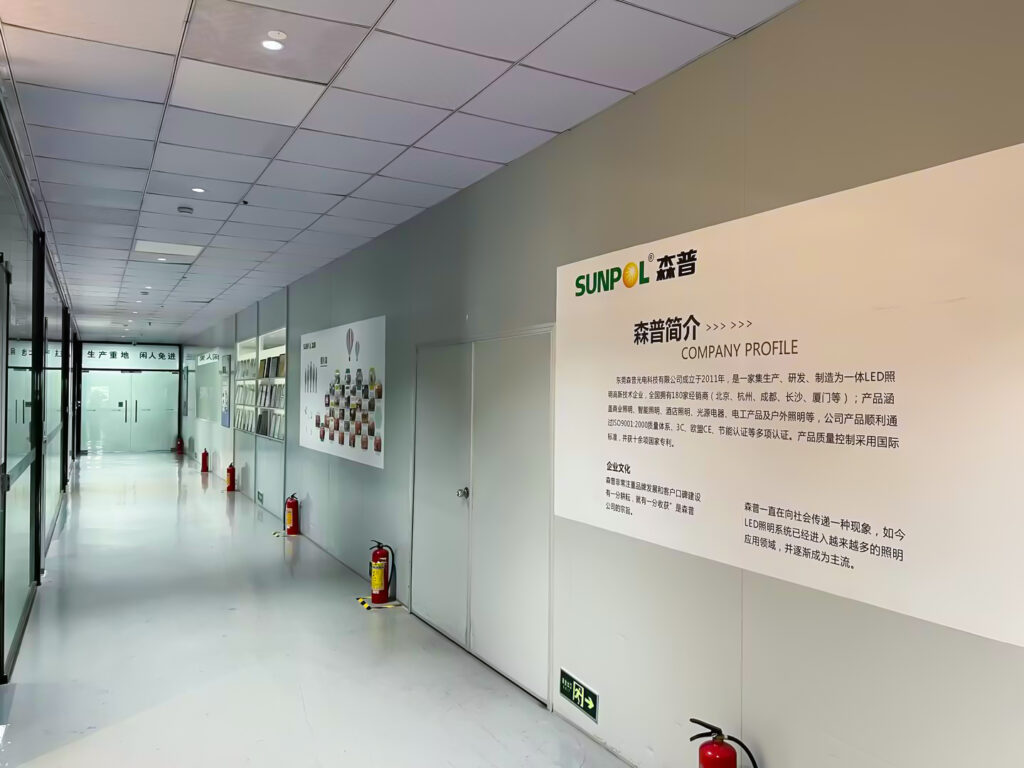
The company’s published factory and quality-control information also gives procurement teams a basis for technical evaluation and further supplier qualification.
OEM or ODM project feasibility, development costs, quantities, and production commitments should be agreed individually based on the proposed design.
11. Start Your Commercial Lighting Project with Clear Requirements
Successful OEM/ODM cooperation begins with an accurate project brief.
Whether you are building a private-label lighting collection, sourcing fixtures for commercial installations, or exploring a new lighting concept, the initial discussion should establish the intended application, technical requirements, target market, and commercial expectations.
For a more productive conversation, prepare available drawings, product references, preferred specifications, estimated quantities, and the required delivery schedule.
SUNPOL can then review the proposed lighting requirements and discuss suitable product options and next steps.
Explore SUNPOL commercial lighting manufacturer solutions and project consultation to begin a technical discussion or request product information.
Conclusion
Selecting a commercial lighting manufacturer is ultimately a decision about engineering capability, manufacturing consistency, and long-term cooperation.
OEM and ODM projects work best when technical expectations are established early, prototypes are evaluated carefully, and production requirements are agreed before manufacturing begins.
MOQ, pricing, and delivery schedules matter, but they should never be considered separately from product quality and project risk.
For commercial lighting brands, distributors, and contractors, a dependable manufacturer is more than a source of fixtures. It is a partner capable of supporting product development and delivering consistent results as business requirements evolve.
With its focus on precision manufacturing, optical performance, and showroom-oriented lighting solutions, SUNPOL offers a practical starting point for businesses evaluating professional commercial lighting cooperation.